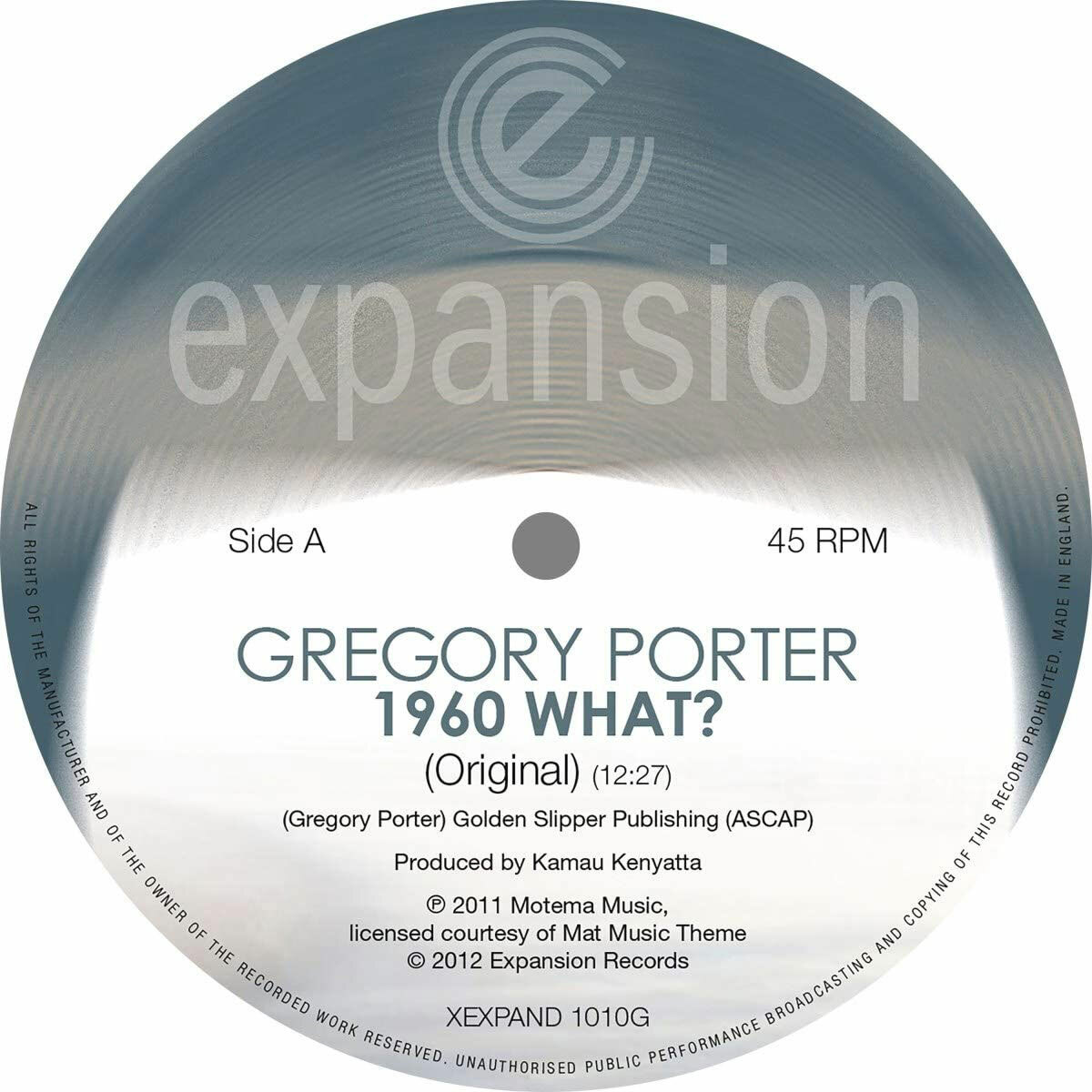
As Expansion Records looks forward to celebrating its 40th Anniversary, 1986 to 2026, here's a look back to one of its earliest signings.
In 2010, Expansion Records released a UK single by a then little-known American jazz and soul singer named Gregory Porter. The track was "1960 What!", a politically charged anthem that cut through the noise of mainstream playlists and cookie-cutter pop productions. It was a statement piece, steeped in history and groove, and it hinted at an artist destined for something bigger. Expansion saw it before the rest of the industry caught on. Today, Gregory Porter is one of the most recognisable jazz voices in the world; Grammy-winning, festival and critically acclaimed. But in those early days, it was the independent labels that gave him a platform, Motema Music in New York, and Expansion Records in the UK, not the majors. Further more, Expansion released a further single On My Way To Harlem in 2013, for the 7" vinyl market in a mix that made it more accessible to mainstream radio.
That story sums up the importance of labels like Expansion Records in today's music landscape. Where once the US majors acted as gatekeepers, nurturing and developing acts for the long term, their priorities have shifted. Artis development has been replaced by data chasing. A&R meeting revolve around TikTok trends and Instagram metrics, not necessarily the strength of the music. Unless an artist arrives with a ready-made audience and viral numbers, they are unlikely to be given a chance. In that climate, independent soul labels have become more vital than ever.
Recognising Talent Beyond The AlgorithmWhen Expansion championed Gregory Porter, they did so because they heard the quality in his music. They saw an artist with depth, substance and longevity; qualities that algorithms can't measure. Porter was not a social media phenomenon in 2010. He didn't need gimmicks or quick-fire content to sell his artistry; he had a voice, a message and authenticity. Expansion was willing to back that, putting their weight behind a single that resonated with real listeners, not just playlists.
That willingness to recognise genuine talent, regardless of follower counts, is precisely what keeps soul music alive. Expansion's catalogue is a testament to this ethos. The label has consistently supported independent soul artists from around the world, offering them a home where the music itself takes precedence. In an era where major labels are reluctant to invest unless the numbers are already stacked in their favour, Expansion acts as a counterbalance, ensuring that quality doesn't get lost in the shuffle.
The Major Label ShiftIt's worth spelling out how start the contrast has become. Once upon a time, the majors would take risks on acts who needed time to develop. They'd fund tours, studio time and marketing with the understanding that an artist might not break until their second or even third album. Think of how many legendary acts were nurtured that way. But, with the streaming economics and quarterly profit reports now driving the machine, those days are gone.
Instead, majors increasingly wait until an artist has proven themselves independently, often through viral content or by building a huge organic following on social media. Only then do the majors step in, usually with restrictive contracts that capitalise on an artists' existing audience rather than fostering their growth. The emphasis is less on developing careers, more on monetising short-term popularity.
Expansion's Global ReachThis is where Expansion Records plays a crucial role. It's not just about discovering talent; it's about giving independent soul artists from across the glove a platform that respects their craft. Over the years, the label has worked with acts like Output/Input and Cornell CC Carter from the US; The Brit Funk Association from the UK and Tristan from Holland and beyond, uniting them under shared commitment to quality soul music.
For many of these artists, Expansion provides their first real connection to a wider audience. The label's reputation within the soul community carries weight. Collectors, DJs and fans know that if a record comes out on Expansion, it's worth paying attention to. That stamp of approval is invaluable for independent artists trying to cut through in a saturated market.
Keeping The Soul Scene AliveBeyond individual careers, labels like Expansion help to sustain an entire ecosystem. The independent soul scene thrives on pysical releases, specialist radio shows, live gigs and dedicated festivals. Expansion supports all of that by putting out music that DJs can spin, collectors can treasure and fans can rally around.
Without labels like this, much of that infrastructure would collapse. Major are not interested in pressing limited-run 7-inches for collectors such as the forthcoming '7-inch Wonders of the World' collection, or in servicing niche radio shows with new underground cuts. Expansion fills those gaps, keeping the culture alive. The ripple effect is huge: artists gain exposure, fans get access to fresh talent and the scene maintains its vibrancy.
The Gregory Porter EffectGregory Porter's story is the perfect case study. Expansion's early support helped him find an audience in the UK where soul and jazz communities were already receptive. That momentum contributed to his eventual signing with Blue Note and his subsequent International breakthrough. But had Expansion not recognised his potential, could he have reached those heights as quickly? Or, at all?
It's easy to look back now, when Porter is selling out arenas and topping charts, and assume it was inevitable. But, at the time, it wasn't. He needed a label prepared to take a chance on him. Expansion did exactly that. And, while Porter may now be a household name, Expansion continues to provide the same lifeline for emerging artists who deserve to be heard.
Why it Still Matters TodayThe landscape has only become tougher for independent soul artists in the years since "1960 What!" was released. The dominance of streaming platforms, the pressure to go viral and the homogenisation of mainstream playlists all work against music that doesn't conform to the current algorithmic formula.
In that climate, the role of Expansion is not just important - it's essential. By giving artists a platform based on quality rather than metrics, the label ensures that soul music continues to evolve, grow and inspire. Without such outlets, we risk losing an entire generation of artists whose work may never fit neatly into a viral video but whose music speaks to the human experience in ways that truly matter.
Conclusion: A Legacy of SubstanceWhen Expansion Records released Gregory Porter's "1960 What!" in the UK, they weren't just putting out a single. They were making a statement about the kind of music that deserves to be heard. Porter's subscquent success proves they were right. More importantly, it proves that there is still immense value in labels that look beyond the numbers and focus on nurturing genuine artistry.
In a world where majors increasingly act as venture capitalists chasing quick returns, Expansion stands as a reminder ofr what record labels are meant to do: discover, support and champion talent. Independent soul artists - and their listeners who love them - owe a grate deal to labels like this. Without them, the soul scene would be poorer; quieter and far less diverse.
Gregory Porter's journey is the headline example, but it's also just one of many. Expansion continues to give a platform to artist who might otherwise be ignored. And, as long as the majors prioritise algorithms over artistry, the role of independent labels like Expansion will only become more critical. They're not just keeping the music alive; they're keeping the soul in soul.
Expansion Records celebrates its 40th Anniversary, 1986 to 2026.