There is a persistent myth in the story of British music that soul was something the UK simply imported, absorbed and occasionally sold back to America with a cover version attached. It is a myth that does a disservice to a generation of Black British musicians who took that American influence and built something distinctly their own out of it, on their own terms, in their own accents.
From the Windrush Generation to the Dancefloor
The roots of this story go back to the arrival of Caribbean migrants in postwar Britain, whose musical traditions, from sound system culture to the rhythmic sensibilities of ska and reggae, took hold in cities such as London and Bristol. Their children, born and raised in Britain, grew up straddling two worlds. They inherited Caribbean bass culture from their parents while absorbing American funk, soul and disco from the radio and the record shop. By the mid to late 1970s, that collision had produced a genuinely new sound.
It did not happen by accident. A handful of key London and southeast England clubs, among them the 100 Club and Canvey Island's Goldmine, became the testing ground, championed by DJs including Chris Hill, Robbie Vincent and Steven "Froggy" Howlett. Young Black British musicians, many of Caribbean descent, began forming their own bands rather than simply covering American hits. Crucially, as guitarist Jean-Paul "Bluey" Maunick later reflected, this generation avoided putting on faux American accents. They sang and played as themselves, which is precisely what gave the music its own identity.
Britfunk Takes Shape
By the late 1970s this scene had a name: Britfunk. London's Light of the World, an eight-piece led by Gee Bello and Nat Augustin, helped set it in motion after being signed to Ensign Records in 1979, their horn section later spinning off into Beggar & Co. Hi-Tension delivered one of the genre's defining hits with "British Hustle" in 1978, reaching number eight in the charts. Central Line, named cheekily after the London Underground line, built a run of chart singles between 1981 and 1983 under producer Roy Carter, formerly of Heatwave, culminating in an electro-funk reworking of the jazz standard "Nature Boy". Freeez, fronted by John Rocca, scored the genre's biggest hit with "Southern Freeez" in 1981, also reaching number eight.
What united these acts was not just a sound but a shared understanding that Black British musicians could compete with, rather than merely imitate, their American counterparts. Author Robert Strachan has written about Britfunk as a vehicle through which the first generation of British-born Black musicians found their own expression, adapting African-American musical forms to a specifically British context. The result had a looser, more dub-tinged rhythmic feel than its American cousin, a legacy of the Caribbean roots so many of these musicians shared.
Street Soul and the Next Generation
As Britfunk's first wave faded in the early 1980s, a new, more technologically driven strain emerged. Loose Ends, 52nd Street and Imagination began incorporating drum machines and synthesisers, building tracks at home on affordable equipment rather than relying on live horn sections. This became known as street soul, a raw, minimal sound shaped by drum programming, reggae-informed basslines and tender, conversational vocals, broken not through daytime radio but through pirate stations and independent record shops. It was music made largely outside the mainstream music industry, on small regional labels, because Black British artists were so often excluded from it.
By the end of the 1980s, this lineage fed directly into Soul II Soul, whose founder Jazzie B had come up through London's sound system culture. Their 1989 single "Back to Life (However Do You Want Me)", featuring Caron Wheeler, topped the UK charts and carried this homegrown sound to an international audience, proof that what had started in small clubs and on independent 12-inch singles could stand at the very top of the charts.
Why This Matters to Expansion
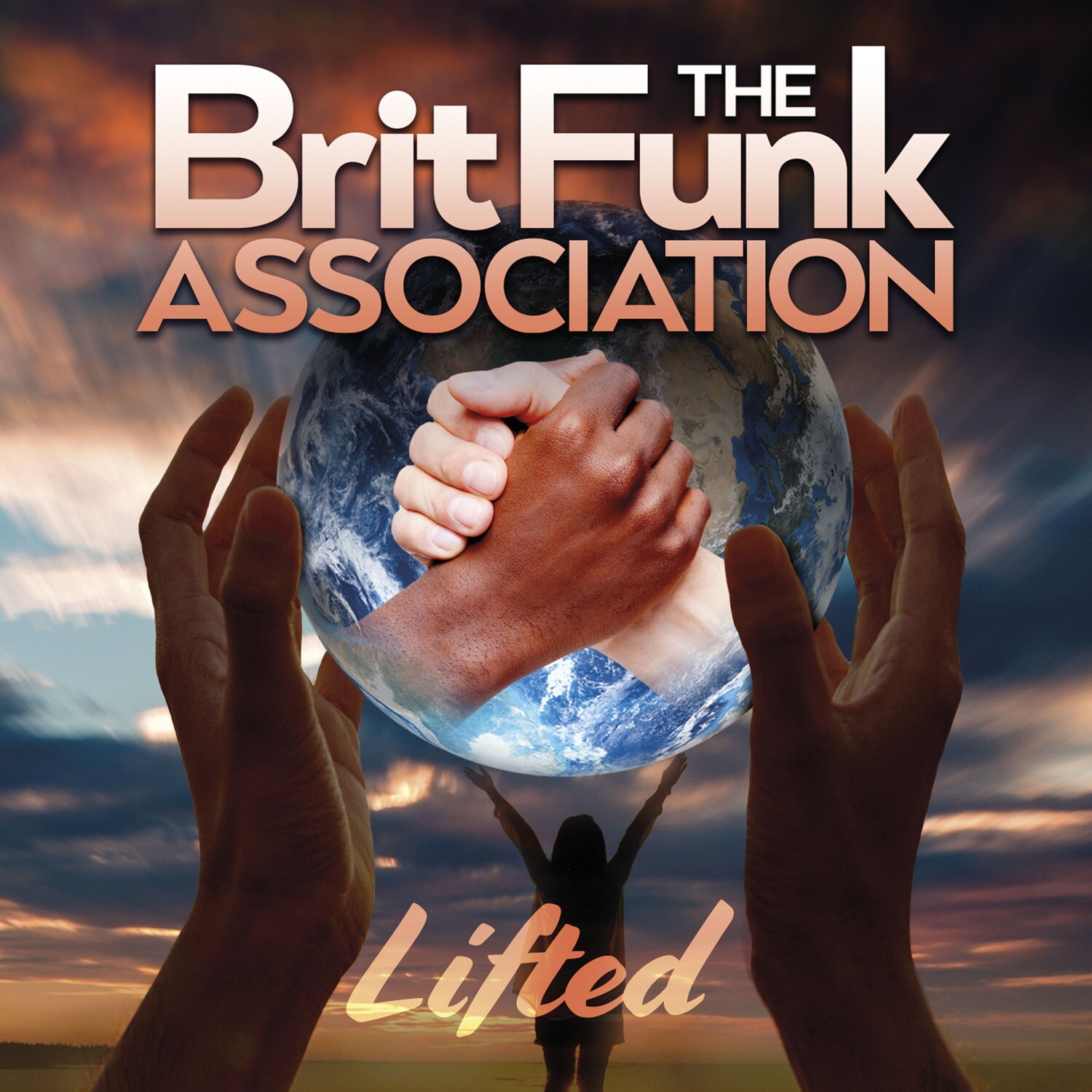
This history is not a footnote to Expansion's own story. It is directly represented in the catalogue. The label's "Lifted" album by The Brit Funk Association brings together founder and original members of Hi-Tension, Light of the World, Beggar & Co and Incognito, artists whose earlier work sits at the very centre of the story above. Thirteen original tracks carry forward the jazz-funk sensibility of that first Britfunk generation, performed by the musicians who helped build it in the first place, decades on.
That continuity matters. Genres like Britfunk and street soul are too often filed away as historical curiosities, worth a mention in a documentary and little else. But the musicians who created them are still recording, still touring, and still shaping the sound of British soul today. For Expansion, a label built on precisely this kind of long memory, that is not incidental. It is the point.
For listeners coming to this story for the first time, the lesson is a simple one. British soul was never just an echo of Memphis, Philadelphia or Detroit. It was, and remains, its own tradition, built by musicians who took what they loved about American soul and funk and turned it into something unmistakably, and proudly, their own.
Hear that lineage for yourself. Lifted, the second album from The Brit Funk Association, is available now from Expansion Records, thirteen tracks of jazz-funk played by the musicians who helped build the genre in the first place.