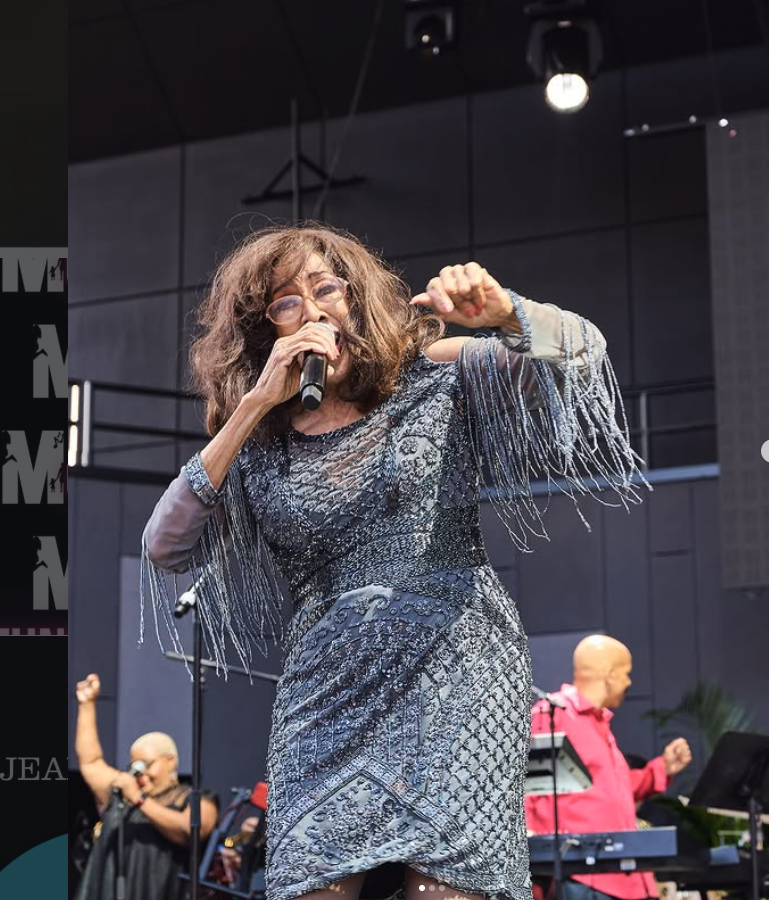
There is a moment in Jean Carne's 1979 recording of "My Love Don't Come Easy" where her voice seems to move beyond the confines of the song entirely. It lifts, it lingers, and it settles back down with the kind of authority that only comes from a singer who has absolute command of every note she produces. It is precisely that quality - elevated, sophisticated, emotionally assured - that sits at the heart of what collectors, DJs and serious listeners have come to call "luxury soul."
The term is not an official genre classification. You will not find it on a Spotify drop-down or in most music encyclopaedias. But within the UK soul community in particular, it has become a useful and widely understood shorthand for a very specific kind of music: soul that reaches for something more refined than raw grit, music where orchestration, vocal technique and production craft all operate at the highest possible level. And few artists have embodied that ideal more completely than Jean Carne.
Where the Sound Came From
To understand luxury soul, you need to understand Philadelphia International Records. Founded in 1971 by Kenneth Gamble and Leon Huff, PIR was built on the belief that Black music did not have to choose between artistic ambition and commercial appeal. Their house band, MFSB, brought together some of the finest session musicians in America, and the orchestral arrangements that defined the Philly sound gave soul music a warmth and grandeur that set it apart from both the raw energy of Southern soul and the harder funk coming out of James Brown's orbit.
The Philly sound was always luxurious in texture. String sections that swelled and cascaded, brass that punched without ever feeling aggressive, production that placed the vocalist at the centre of something genuinely cinematic. It was music that dressed up. It was music that expected you to dress up too.
When Jean Carne signed to Philadelphia International in 1976, she brought something the label had rarely encountered in quite that form: a voice with a claimed five-octave range, rooted equally in gospel, jazz and soul, capable of both devastating intimacy and operatic power. Her debut album merged the best of 1970s soul and jazz with tight instrumental support from MFSB and Instant Funk. The result was unmistakably Philly in construction, but something else was present too - a quality of refinement, of control, of conscious artistry that felt almost chamber-music in its precision.
Defining the Sound
So what exactly makes a piece of soul music "luxury"? There are a few consistent characteristics worth understanding.
The first is production depth. Luxury soul tends to be immaculately produced, with arrangements that reward repeated listening. There are layers here that a quick play will not reveal: counter-melodies buried in the strings, subtle rhythmic shifts in the rhythm section, harmonic choices that lean into jazz without fully committing. The music is designed to be savoured rather than consumed.
The second is vocal sophistication. This is not about showing off range for its own sake, though luxury soul vocalists often have remarkable voices. It is about the intelligence with which that voice is deployed. Phrasing is deliberate. Dynamics are controlled. The emotional content of a lyric is communicated through restraint as much as through power. There is a reason Jean Carne's work has always attracted serious listeners: she never wastes a note.
The third is lyrical and thematic maturity. Luxury soul tends to deal with adult emotion - love that is complicated, loss that has been processed rather than simply wept over, desire that is articulate rather than urgent. The songs assume an audience capable of sitting with ambiguity. They are not trying to get you on your feet in the first eight bars. They are trying to stay with you for years.
The UK Connection
It is no accident that the luxury soul concept has found its most devoted audience in the United Kingdom. UK soul fans have always had a particular affinity for the sophisticated end of Black American music. The Northern Soul scene, which shaped many of the collectors and DJs who would later champion this sound, developed an almost scholarly approach to discovering and preserving records that the mainstream had overlooked. That sensibility translated naturally into an appreciation for music that rewarded careful attention.
When Jean Carne made her legendary sold-out debut at the Hammersmith Odeon in February 1985, she was performing for an audience already primed to understand what she represented. UK fans had been importing and treasuring her Philadelphia International recordings for years. They understood the craft involved. They recognised the lineage she represented. And they responded accordingly.
That connection between Carne and the UK has only deepened over the decades. Expansion Records, which has championed her legacy with carefully curated releases including the compilation Collaborations, assembled by label founder Ralph Tee and journalist David Nathan, has played a significant role in keeping that catalogue alive and accessible. Her 2026 return to the stage as part of The Sound of Philadelphia tribute, backed by a full orchestra, demonstrated that the appetite for this music remains entirely undimmed.
The Artists Who Defined the Sound
Jean Carne is central to luxury soul, but she is not alone in defining it. Phyllis Hyman, whose combination of extraordinary vocal range and theatrical intensity produced some of the most emotionally sophisticated soul recordings ever made, belongs in this conversation without question. So does Grover Washington Jr., whose instrumental work provided the sonic backdrop for some of the genre's most accomplished recordings. Norman Connors, who produced several of Carne's sessions, understood instinctively how to build an environment in which this kind of artistry could flourish.
Further back, you find precursors in Nancy Wilson, in the more orchestrated work of Nina Simone, and in the sophisticated pop-soul of Dionne Warwick working with Burt Bacharach. The lineage is long and consistent: artists who treated soul music as a vehicle for something approaching high art, without ever losing sight of the fact that it still needed to move you.
Why It Still Matters
There is a temptation, in some quarters, to treat luxury soul as music for a certain generation - something that belongs to a particular era and is sustained largely by nostalgia. That misunderstands what is actually happening when people return to these recordings.
The reason Jean Carne's voice on a forty-year-old recording can still stop a room is not nostalgia. It is quality. The production holds up because it was excellent. The vocal performances hold up because they were delivered by a singer of extraordinary ability. The songs hold up because they were written by people who cared about craft.
Luxury soul endures because it set a standard. It demonstrated what soul music was capable of when everyone involved - the singer, the producer, the arranger, the musicians - brought their absolute best. It is music that asks something of its listener, and gives back considerably more than it asks.
For those new to the genre, Jean Carne's Philadelphia International catalogue is the obvious starting point. Happy to Be With You and When I Find You Love are both essential listens, and the Collaborations compilation, released by Expansion Records, offers an ideal way into her broader work spanning soul and jazz partnerships with artists including Grover Washington Jr, Roy Ayers and Dexter Wansel.